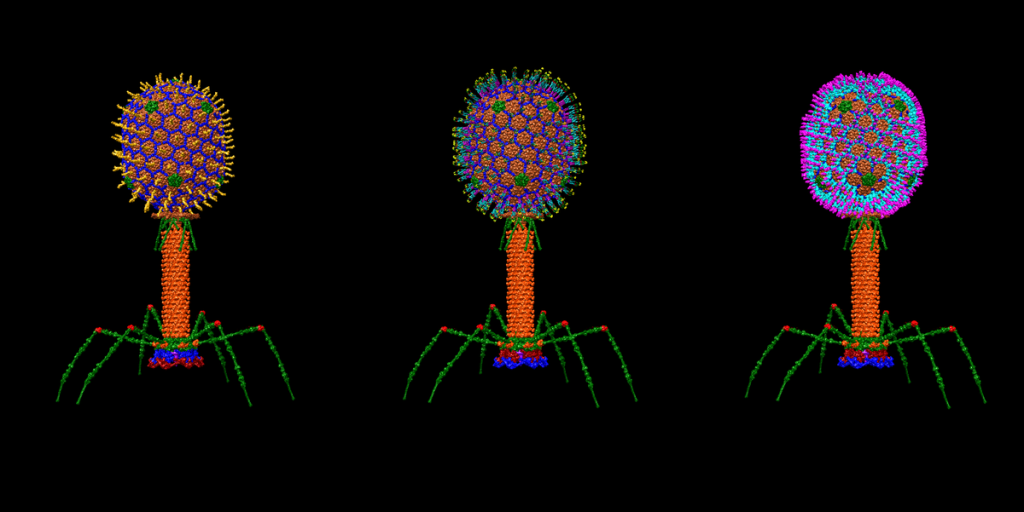
What would you guess is the most numerous creature on Earth? Perhaps flies, or ants, or probably more likely bacteria? It is, in fact, the sworn enemy of bacteria- the bacteriophage. There are an estimated 1031 bacteriophages on the planet, which is more than the number of every other living organism combined. On top of that, this creature is truly deadly, destroying half of the world’s bacteria every 48hrs. However, this isn’t a doom and gloom piece because for humans, the bacteriophage is actually our friend. Here we will be looking at what it is, how it can help keep our meals tasty, and how it might be a vital safety net to our health systems in the future.
What is a bacteriophage?
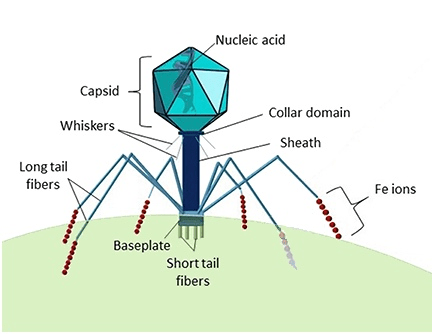
As we have learned this year, viruses can have a big impact on people. However, humans not the only ones dealing with their potentially deadly attack. A bacteriophage is a virus that infects bacteria. They tend to be very specific, with each one targeting very few or even just one type of bacteria. When the bacteriophage finds a suitable host, it attaches onto its surface and injects genetic material into it. This then forces the bacterium to rapidly make thousands of copies of the bacteriophage. Eventually these copies explode out, destroying the host and spreading onwards, an event known as lysis. After this, the whole process begins again.
It is thought that up to 70% of the bacteria in the world’s oceans, like bacterioplankton or certain types of algae, are infected with bacteriophages at any given moment. This means they die in huge numbers, but it also means that when lysis happens, the carbon that was previously stored in them is released, becoming available to be used by other creatures in the ocean. The explosive process is an essential part of the carbon cycle, which in turn is essential for life, as plants and animals need access to carbon to be able to grow and develop.

Food and agriculture
Despite their terrifying sounding life cycle, bacteriophages really can actually do a lot of good, even beyond the carbon cycle. As mentioned, bacteriophages are really specific to the type of bacteria they infect, and this can include bacteria that are problematic to humans, such as Listeria, Salmonella and various harmful forms of E. Coli, which when consumed from food can cause illness and even death. It has been suggested that these pathogens are becoming increasingly common in our environment and food systems, as industrial forms of animal agriculture lead to huge cesspits of animal faeces being collected, creating the perfect breeding ground for harmful bacteria. These bacteria can then spread to animals, can contaminate soil and water, and eventually contaminate plants we eat too, making them a growing danger to humans.
This is where the bacteriophages come in handy. As they often target one specific kind of bacteria, e.g. Listeria, they can be used to remove only the bad bacteria, making food safe whilst allowing the good bacteria found in food and in our own gut systems to remain. This new technology is gaining a lot of traction, with bacteriophage companies such as Listex getting full United States Food and Drug Administration (FDA) approval in the last decade. It is seen by many to be a better alternative to cleaning methods like irradiation and chlorine washing, which not only kill good bacteria but also taste. Bacteriophage treatments are also a favoured alternative to those concerned about the genetic modification of crops to deal with bad bacteria. Bacteriophage sprays, used to apply the bacteriophages to potentially infected foods, have also been seen to slow down the growth of bacteria that spoils food, meaning these foods can last longer without preservatives.

Health and antibiotics
As we have seen, bacteriophages can play an important role in preventing people and animals from getting sick by destroying harmful bacteria in our environment. As it turns out, they can also be useful as a treatment once bacteria has already entered the body.
If you are from much of the rest of the world however, you might wonder why you’ve never heard of these
Historically, antibiotics have been more readily available and favoured in much of the Western world. However, in former Soviet countries such as Georgia, this was not the case, and so bacteriophages were much more commonly used in medicine, starting out in the 1920s and 30s. Much of the research on bacteriophages therapies was published in Russian language forums, with this language-barrier meaning the knowledge was not taken up so readily globally. Today however, interest is growing in using bacteriophage therapies, with the approval of this technique for treating things like lung infections, burn infections and ear infections in recent years.
Even more exciting, bacteriophages could be a part of the solution to antibiotic resistance. Antibiotics are a key, and sometimes only, form of medicine to treat certain bacterial infections. However, bacteria can become resistant to antibiotics if they are overused, or if a course of antibiotic treatment is stopped partway through (e.g. when someone feels better rather than when the course is finished), among other reasons. This is incredibly dangerous because if bacteria become resistant to their only effective cure, routine procedures like getting your tonsils removed, or having a caesarean section, could become far more deadly when potential post-operative infections can’t be treated. Bacteriophages are now being studied and trialled as a way to overcome this antibiotic resistance, by targeting and destroying the resistant strains before they have time to multiply. There have already been multiple cases of people on the verge of death, resistant to the effects of antibiotics, who with a treatment of bacteriophages have made a full recovery. Medical hope comes in the form of the bacteriophage!

Whilst bacteriophage research is still quite young as a field, knowledge of these viruses has been around longer than you may expect. Certain rivers such as the Ganges have long been believed to have healing powers. Interestingly, studies into these rivers found than, whilst on the one hand they contain effluent and waste runoff from surrounding towns and cities, this also means that bacteriophage populations thrive there, and when ingested by people may help them to overcome some infections. From a historical sacred river cure, to affordable Soviet medicine, to keeping our foods safe and our carbon cycling, bacteriophages are some of the unsung heroes of our health and our planet.
For more info:
An excellent podcast by gastropod on the bacteriophage, focusing mostly on agricultural applications, can be found here
New Yorker article on the more medical side of bacteriophages available here
Music: kongano.com



Leave a Reply